
Okay, so check this out—I’ve been fiddling with wallets for years. Wow! My instinct told me hardware keys were king. Then something felt off about the tradeoffs people kept accepting: convenience for security, or vice versa. Initially I thought bulky devices and seed phrases were the only sane options, but that assumption cracked after I tried a few smart-card solutions. On one hand these cards feel almost quaint. On the other hand they solve a bunch of annoyances in a way that actually scales for everyday people. Hmm…
Short story: smart cards compress security into a little plastic slab. They look simple. They behave like a second brain for your keys. And they fit in a wallet, pocket, or phone case. Seriously? Yes. My first impression was skepticism, then curiosity, then a kind of reluctant admiration. This piece is about why that admiration stuck, what the trade-offs are, and how backup strategies need to evolve to match the form factor.
Think about the classic cold wallet setup. Long seed phrases. Paper backups. A drawer or a safe. It’s all very dramatic. But it’s also error-prone. Typo risk, combustion risk (paper doesn’t like water), and user mistakes—very very common. Smart cards shift the model: private keys never leave secure hardware, interactions are transaction-level, and UX can be much tighter. That doesn’t make them magic. There are limits. But for a lot of people, especially those wanting a simpler lifecycle for keys, they represent a practical middle ground.
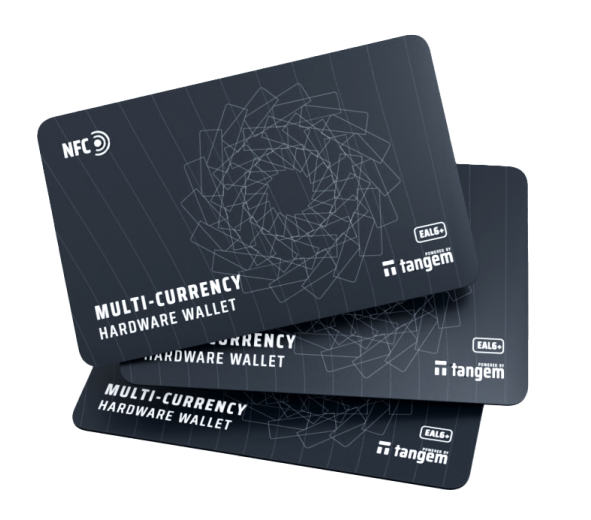
Why a card-based approach matters
When I started messing with these devices, I was surprised by how natural the interaction felt. Whoa! You tap, authorize, and go. There’s an on-the-spot trust that the device takes responsibility for signing. My gut feeling said this reduces human error. Actually, wait—let me rephrase that: it reduces one class of human error, specifically mistakes tied to copying or retyping seeds. Still, you can’t ignore other failure modes like loss, damage, or manufacturing risk.
Here’s the practical angle: a smart card can act like a sealed vault for a key or a deterministic key generator that derivates addresses on demand. The card is small. People carry it. That matters. People forget passphrases; they misplace paper backups; they don’t rotate keys. A plastic card that’s NFC-enabled or USB-connected turns crypto key management into an experience closer to paying with a debit card than conducting a ritual. This is both the strength and the weakness. The strength is adoption; the weakness is the new attack surface—card cloning, supply-chain compromise, firmware bugs.
Now, for folks who worry about supply-chain attacks, here’s a clear thought: choose brands that publish audits and allow independent verification when possible. One decent example of a product line that tries to balance convenience and transparency is the tangem hardware wallet. I liked that the design choices are simple and auditable. I’m biased, but usability matters—if you hand someone a seed phrase that they immediately lose, you didn’t secure anything.
On the technical side, a smart card’s biggest win is containment. Keys live inside the secure element. Transactions go in, signatures come out. No clipboard exposure. No sloppy seed backups. But containment can lull users into complacency. People assume “secure element” equals “invincible.” Not true. Attack vectors exist at the edges: compromised host devices, social engineering, and physical tampering if a card goes through suspicious hands. So you still need a layered approach: secure storage, good backup, and ongoing vigilance.
Backup cards are a natural complement. Imagine generating a recovery pair of cards at purchase—one you keep, one you store off-site. That’s a simple redundancy model that beats a napkin under the mattress. And yes, redundancy introduces complexity: how do you ensure both cards remain uncompromised? Do you split secrets between cards? That gets into multi-party computation or Shamir’s Secret Sharing territory, which is clever but harder for mainstream users. There’s a design tension between a system being user-friendly and being cryptographically robust; sadly, you rarely get both for free.
Okay—small detour. (oh, and by the way…) Some folk will insist on air-gapped ceremonies with QR codes and solder-smoke rituals. Good for them. But most people need something they can actually use on a Tuesday morning while grabbing coffee. A card hits that sweet spot: secure enough for meaningful amounts, and convenient enough that people will actually use it. That’s a human problem, not a tech problem. We design for human behavior, even when it frustrates us.
Let me walk through a practical example. I once watched a friend nearly lose six figures because they mistyped a seed during wallet restore. Heart-stopping moment. They didn’t have a backup card or any secondary durable backup. If they’d used a card with an easy recovery scheme, the damage would have been avoidable. This made me realize that risk design must be empathetic—anticipate real human mistakes, not ideal user behavior.
Security trade-offs are real. For enterprise-like setups you might prefer multi-sig across multiple cards or hardware modules sitting in different geographies. For retail users, a single-card plus secure off-site backup (like a safe deposit box) is often the pragmatic path. Multi-sig is great, though actually a pain when you need to recover quickly at 2 AM. On the other hand, multi-sig can save you from catastrophic single-point failures. On balance: mix-and-match based on capacity for complexity and threat model.
There are also policy and custodial considerations. Custodial services exist for a reason: they offload operational burden. But custody requires trust. If you want self-custody without the full burden of keys-in-your-head stewardship, cards offer a bridge. Pair them with reputable wallets and a documented backup plan, and you’ve minimized the human weak-link. Still, I can’t stress enough: run a test restore. Seriously. Test your backup before the world decides to be uncooperative.
FAQs
Are smart cards as secure as a dedicated hardware wallet?
Short answer: often they’re comparable for many threat models. Longer answer: it depends on the device’s secure element, firmware integrity, and supply-chain. Cards minimize exposure by design, but the devil is in the implementation details.
What about backups — how do I avoid single-point failure?
A pragmatic approach is to use at least two independent backup cards or split backups geographically. For higher security, consider multi-sig across separate devices or Shamir-like sharing schemes, though those add complexity. I’m not 100% sure about the ideal for every user; threat model first.
Can a smart card be cloned?
Not easily, if it uses a certified secure element with anti-cloning protections. Yet nothing is impossible. Tampering and supply-chain attacks are the plausible failure modes, so buy from reputable vendors and verify packaging and authenticity checks when available.
Okay, so here’s what I keep telling people: keep it simple, but not simplistic. Use a physical device that removes the human copying step if you can. Make a backup plan that assumes you will be tired, distracted, or in a rush at least once—that’s human reality. And test your recovery method. My instinct said “go heavy on redundancy,” but when I sat down and calculated the operational strain, I realized redundancy has to be proportional to the value at risk. Balance matters.
Last note: tech trends change, but habits persist. Cards feel like a practical evolution toward secure, usable custody. They are not a silver bullet. They are, however, a meaningful option for folks who want a blend of security and everyday usability. If you’re curious to see one of the mainstream implementations, check out this tangem hardware wallet and decide how it fits your own risk tolerance. I’m biased toward solutions that people will actually adopt—because security that sits unused is security that doesn’t help anyone.